The seven problems that account for most Stone Oak garage door calls are heat degraded rollers, broken torsion springs on oversized double doors, frayed or slipped lift cables, openers that are undersized or worn out for heavy insulated doors, photo eye sensor faults, failed bottom seals letting water into sloped garages, and dented or sun faded panels that run into HOA appearance rules. The pattern is driven by the housing stock. Stone Oak is built around larger two and three car doors on homes from the 1990s onward, which means wider spans, heavier doors, and hardware that is now reaching the end of its second or third service cycle.
Key takeaways
- Wider doors weigh more, and weight is what drives spring, cable, and roller wear. A 16 foot double door works significantly harder than a 9 foot single.
- Much of Stone Oak’s original housing stock dates to the 1990s, which puts a lot of doors and openers at 25 to 30 years old and well past their first replacement interval.
- Hill Country elevation and sloped lots make water intrusion a bigger factor here than in flatter parts of San Antonio.
- Stone Oak is not one neighborhood. It is a collection of more than 40 separate communities with different HOA structures, so appearance rules vary block to block.
- Springs and cables are the two problems on this list that no homeowner should attempt. Both hold enough stored energy to cause serious injury.
Why Stone Oak doors fail differently
Stone Oak sits on San Antonio’s far north side, outside Loop 1604 near US 281, across the 78258 and 78260 ZIP codes. The original master plan was filed in 1985, and the area grew outward from there into a collection of more than 40 distinct communities, with original sections built in the 1990s and new construction still going up in the active phases.
That timeline matters mechanically. A door installed in a 1990s section has now run through roughly three decades of daily cycles in a climate that is hard on hardware. A door in a 2015 section has different problems: newer, heavier, better insulated, and often paired with an opener sized right at the edge of what the door demands.
The other factor is door width. Larger homes here overwhelmingly mean two and three car garages, and a wider door is a heavier door across a longer unsupported span. Weight is the variable that drives almost every failure on this list. If you are unsure what you have, our explainer on how wide a single garage door is covers standard sizing, and the Door and Access Systems Manufacturers Association publishes the industry standards that govern how doors of each size are built and rated.
Many of these problems show up citywide, and our broader overview of common garage door problems in San Antonio homes covers the general picture. What follows is what changes when you narrow it to Stone Oak.
1. Heat degraded rollers and dry bearings
Why garage door rollers wear out faster in Stone Oak garages
The problem: grinding or scraping that worsens through the afternoon, rollers with cracked or flat spotted nylon tires, and fine dark dust along the tracks.
Why it hits here: unconditioned garages in this part of the city run well above outdoor temperature through the summer, and many Stone Oak garages face west or south with little mature tree cover in the newer sections. Nylon softens, bearing grease bakes out, and the steel track expands slightly. On a heavy double door, that added friction has more weight behind it.
What to do: inspect every roller with the door closed, looking for cracks, flat spots, or a tire sitting off center on the stem. Replace the full set rather than individual rollers, since they have all taken the same heat and the same cycles.
Call a pro if: the affected roller sits in the bottom bracket, which is under full cable tension and must not be removed by hand.
The full failure sequence is covered in How Does Texas Heat Damage Garage Door Rollers? 7 Signs It’s Not Your Springs. Timing an inspection around the local heat pattern helps, and the National Weather Service is a straightforward way to track when the sustained heat arrives.
2. Broken torsion springs on oversized double doors
Why double garage door springs break sooner in Stone Oak
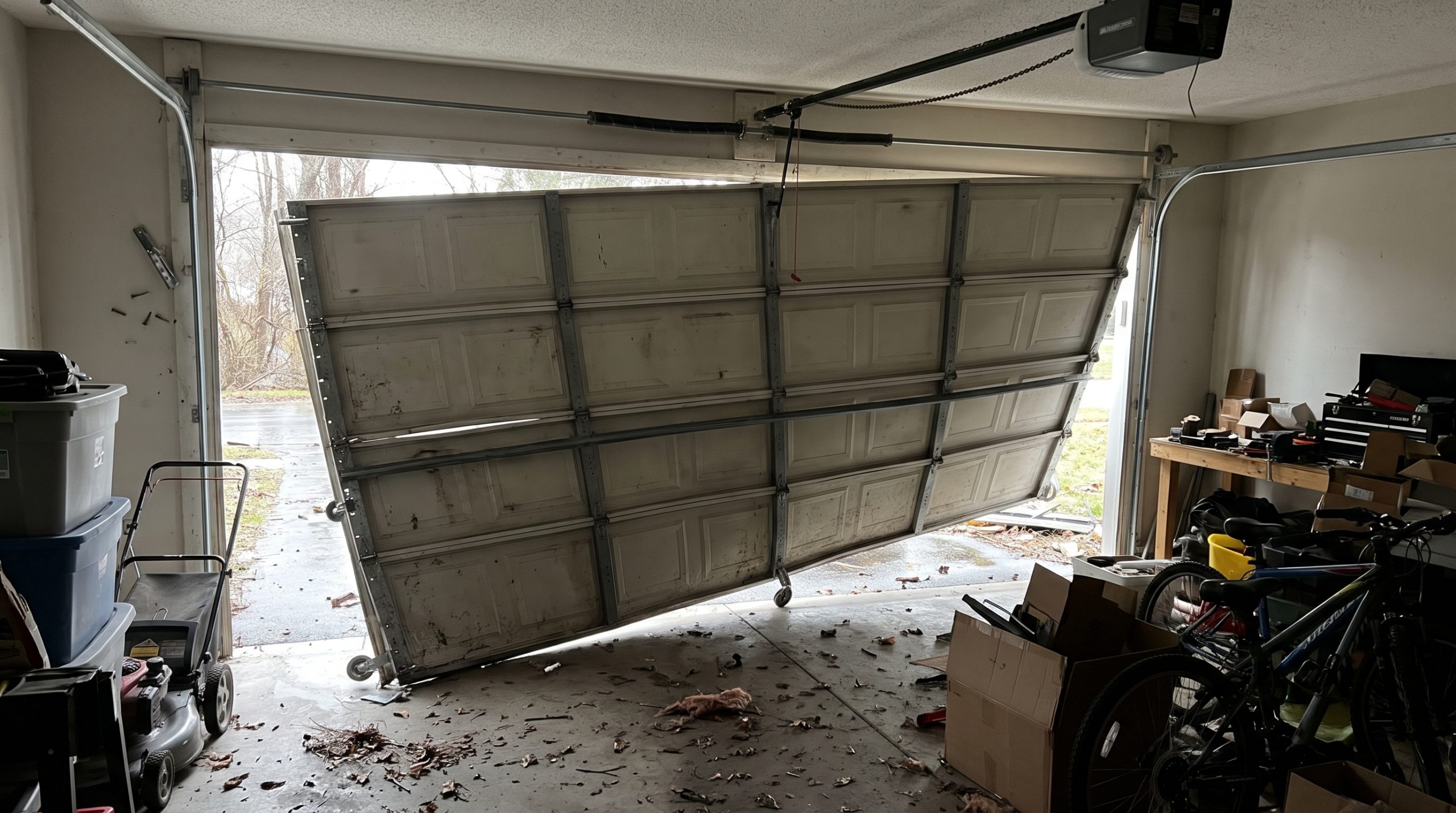
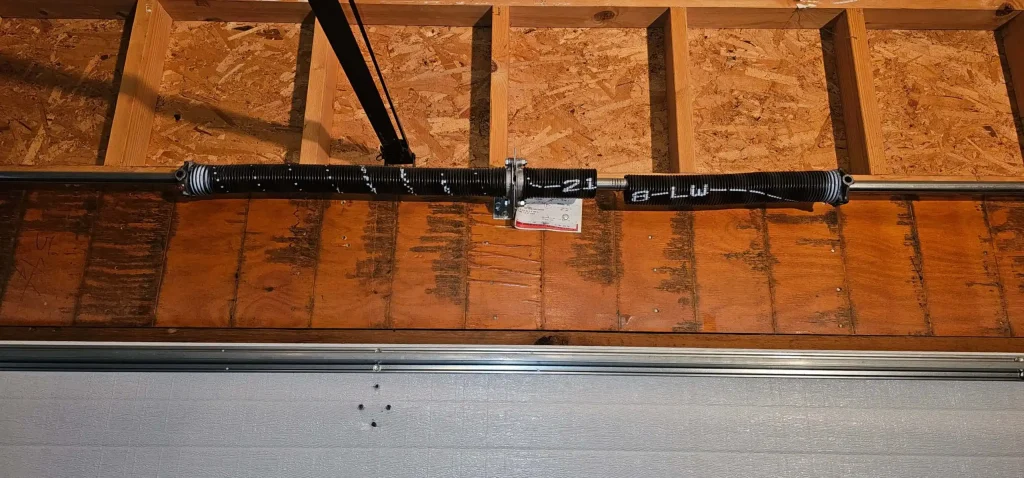
The problem: a loud bang from the garage, a door that will not lift, or a visible gap in a spring coil above the opening.
Why it hits here: springs are rated by cycles, not by years, and a two car household using a double door as the primary entrance can burn through a standard ten thousand cycle spring in well under a decade. Combine that with 1990s original construction and you get a large share of doors that are on their second or third spring set, often with original hardware everywhere else.
What to do: nothing yourself. If a spring is broken, do not attempt to lift the door manually, because the full weight of a double door is on you with no counterbalance.
Call a pro if: always, without exception. This is the most dangerous component on the door. Our post on how long a garage door spring can last explains the cycle math, and replacement falls under garage door spring installation.
3. Frayed or slipped lift cables
What frayed garage door cables look like on a heavy door
The problem: one side of the door sitting lower than the other, slack cable hanging beside the drum, or visible strands sticking out of the cable like a wire brush.
Why it hits here: cables carry the door’s weight once the springs have done their work, so a heavier door puts more load on them every cycle. Cables also fray faster when a door has been running slightly out of alignment, which is exactly what worn rollers cause. The two failures feed each other.
What to do: look, do not touch. Check both bottom corners and both drums visually from a safe distance.
Call a pro if: you see any fraying, slack, or uneven door position. A cable that lets go drops the door. Our piece on how cable condition affects the whole system explains the knock-on effects, and the repair itself is garage door cable repair.
Cables and springs often announce themselves with sound before they fail outright. Telling those noises apart is covered in Why Is My Garage Door Making a Grinding Noise? 6 Causes and What Each One Costs to Fix.
4. Openers that are undersized or worn out
Why garage door openers fail early on heavy insulated doors
The problem: an opener that strains, stalls partway, reverses without an obstruction, or grinds while the door barely moves.
Why it hits here: two distinct populations. Doors in the older sections often still have original or first replacement openers approaching thirty years, well past design life. Newer sections frequently have heavy three layer insulated doors paired with a half horsepower opener that is working at its limit from day one. Both end up on the same service call list for different reasons.
What to do: disconnect the opener with the red release cord and move the door by hand. If it moves smoothly, the opener is the problem. If it binds, the opener is only the symptom.
Call a pro if: you find plastic shavings under the opener head, which means a stripped drive gear, or the motor hums without moving the sprocket. On a unit past roughly fifteen years, a fresh garage door opener installation sized correctly for a heavy door is usually better value than a gear repair on an aging motor.
5. Photo eye sensor faults
Why garage door sensors stop working in bright afternoon sun
The problem: the door refuses to close, reverses immediately, or the opener light flashes without the door moving.
Why it hits here: low afternoon sun striking a west facing opening can wash out the receiving sensor, which is a genuinely underdiagnosed cause. Sensors also drift out of alignment from lawn equipment, sports gear, and storm debris, and the brackets loosen over decades.
What to do:
- Clean both lenses with a dry cloth.
- Check that the indicator lights on both units are steady rather than flickering.
- Confirm both sensors sit at the same height, no more than six inches above the floor.
- If the fault only happens at a specific time of day, sun glare is the likely cause and a small shield or hood usually resolves it.
Call a pro if: the sensors are clean, aligned, and lit, but the door still reverses. That points to a force setting or a mechanical bind rather than a sensor issue. If yours are failing repeatedly, our rundown of the best garage door sensor options covers replacements.
6. Failed bottom seals and water in the garage
Why Stone Oak garages flood during heavy rain
The problem: water across the garage floor after a storm, daylight visible under the closed door, or a bottom seal that is hard and cracked instead of flexible.
Why it hits here: Hill Country terrain means sloped lots, and a driveway that pitches toward the house sends runoff straight at the door. Add Texas UV, which destroys rubber faster than almost any other climate factor, and seals here reach end of life well before the manufacturer’s rating suggests. This is one of the clearest ways Stone Oak differs from flatter parts of San Antonio.
What to do:
- Close the door and look for daylight along the bottom and both sides.
- Squeeze the seal. It should compress and rebound rather than stay flattened.
- Sweep the threshold clear, since debris holds the seal off the concrete.
- Check whether the driveway itself is pitching water toward the opening, which no seal fully solves.
Call a pro if: the retainer holding the seal is bent or the concrete threshold is uneven. Otherwise this is homeowner friendly work, covered in our guide to the easy way to replace a garage door bottom seal.
Seals are one item on a broader seasonal inspection, and the rest are in What Should Be on Your Garage Door Storm Prep Checklist? 8 Checks Before Texas Storm Season.
7. Dented, faded, or non-compliant panels
How HOA rules affect garage door repairs in Stone Oak
The problem: hail dents, sun faded finish, rust at the bottom edge, or a replacement door that does not match what the community association permits.
Why it hits here: Stone Oak is more than 40 separate communities, many of them gated and most with active associations, and appearance standards differ from one to the next. A door that is acceptable in one section may not be in another. Homeowners are frequently surprised that color, panel style, and window configuration can all be governed.
What to do: check your specific association’s guidelines before ordering anything. Photograph existing damage before storm season so a later claim is not argued over which dents are new. Do not attempt to push a dent out, since steel sections crease permanently.
Call a pro if: the crease crosses a hinge, the paint is broken through to bare metal, or the section flexes visibly when pushed. Whether one panel can be replaced or the whole door needs to go depends on age, model availability, and how far the damage extends, which we cover in whether a damaged garage door panel can cause safety issues. When matching a discontinued panel is not possible, a full garage door replacement is often the only route to a compliant, uniform finish.
What you can handle and what you should not
Problem | Safe to DIY? | Notes |
1. Heat degraded rollers | Inspection yes, replacement borderline | Never touch the bottom bracket roller. |
2. Broken torsion spring | No | Do not lift the door manually. Call immediately. |
3. Frayed or slipped cable | No | Visual check from a distance only. |
4. Opener straining or failing | Diagnosis yes, repair no | The manual test tells you which it is. |
5. Sensor faults | Yes | Cleaning and alignment are homeowner friendly. |
6. Failed bottom seal | Yes | The most approachable item on this list. |
7. Dented or faded panels | Inspection yes, repair no | Check HOA rules before ordering anything. |
Garage door repair in Stone Oak
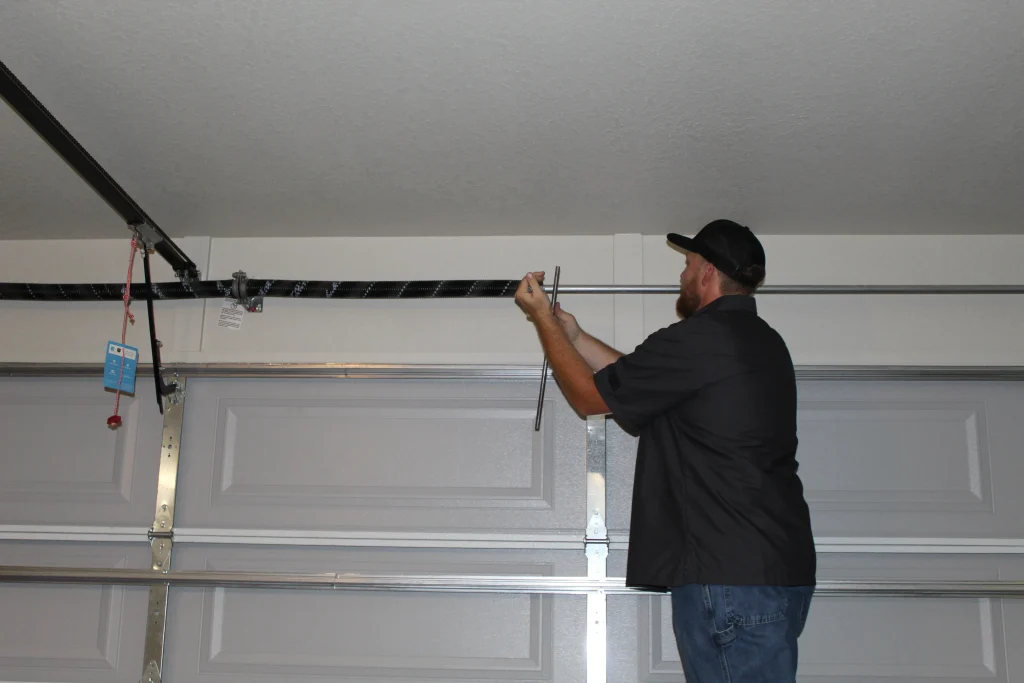
Most of these problems are cheaper and safer to address early, and the two that are not homeowner work at all, springs and cables, are the two that cause injuries when people try. If your door is grinding, sagging on one side, letting water in, or refusing to close, having it diagnosed properly is the difference between one repair and a sequence of them. Lincoln Garage Doors LLC serves Stone Oak and the surrounding 78258 and 78260 communities with same day service from licensed technicians. Book a Stone Oak garage door repair or request a free quote.