If your garage door is stuck open, hanging crooked, or will not close, the most useful thing you can do before a technician arrives is stop touching it. Cut power to the opener, move vehicles and people clear, and take photos. Then secure the opening, because in Boerne an unclosable garage door usually means an unsecured house. The seven steps below take about fifteen minutes total, they cost nothing, and in our experience they are the difference between a single-visit repair and a two-visit one. Step 3 is the one that saves the most money.
Key takeaways
- Stop using the door first. Every cycle on a damaged door adds damage.
- Cut the power, do not just stop pressing the button. Someone in the house will press it.
- Do not pull the emergency release on a door that is stuck open. That is how doors come down hard.
- Photograph before you tidy. Insurance works from evidence, and cleanup destroys it.
- Secure the opening if the door will not close. Boerne is quiet, but an open garage is still an open door.
- Have your details ready when you call. Opener brand, what you saw, what you heard, and whether a vehicle is trapped.
1. Stop using the door and cut power to the opener
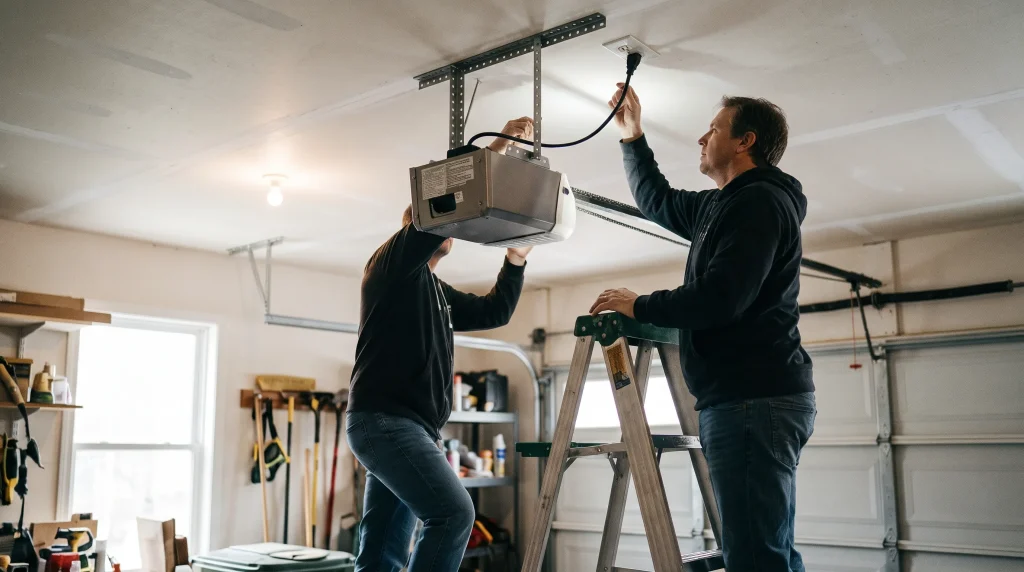
Before anything else, take the door out of service. Not paused, not “we will just use it carefully.” Out of service.
Why it matters: A damaged door is out of balance, and the opener will keep trying to move it anyway. That is how a bent track becomes a bent track plus a snapped cable plus a creased section. We have seen single-part repairs triple in cost because a homeowner ran the door three more times trying to get it to behave.
What to do:
- Stop pressing the wall button and stop using the remote.
- Unplug the opener at the ceiling outlet, or switch off its breaker if you cannot reach the plug safely.
- Tell everyone in the house the door is out of service, especially anyone who uses it as their main entrance.
- Take the remotes out of the vehicles if small children or teenagers are around.
One thing worth checking while you are up there: the safety sensor lights near the floor. If they are blinking or dark, that alone can be the whole problem, and what the color of the light on your garage door sensors means will tell you in under a minute whether you are looking at an alignment issue or something mechanical. If the failure turns out to be the unit itself rather than the door, a technician can tell you quickly whether a repair or a new garage door opener is the better spend.
Why you should unplug a garage door opener during an emergency
Because habit is stronger than instruction. Everyone agrees not to use the door, and then someone comes home in the rain and presses the button without thinking. Removing power removes the possibility.
2. Clear the area and think about the weather
Get people, pets, and vehicles out from under and around the door. Then decide whether the weather is about to make things worse.
What to move:
- Any vehicle parked under or immediately in front of the door, if it can be moved without running the door
- Bicycles, tools, and anything stored along the door line
- Trash bins and yard items that could blow into the opening if the door is stuck open
The Hill Country wrinkle: Boerne and the rest of Kendall County see fast-developing weather, and an open garage during the next round is a very different problem from an open garage on a clear evening. The City of Boerne’s disaster preparedness guidance covers local hazards including flooding, and it is worth signing up for the city’s emergency alerts if you have not. If more weather is coming and your door is stuck open, say so when you call, because it changes how we triage the job.
If you are searching for help locally: our Boerne garage door repair page has service details for the area, including what we carry on the truck for same-day work.
What to do if your garage door is stuck open during a storm in Boerne
Move the vehicles out, move anything valuable away from the opening, and call for emergency service rather than waiting for business hours. A door stuck open ahead of weather is a genuine emergency, not an inconvenience.
3. Identify what failed, without touching it
This is the step that saves the most money, and it takes two minutes with a flashlight. You are not fixing anything. You are gathering information so the technician arrives with the right part.
Look for these five things, with the door closed and the power off:
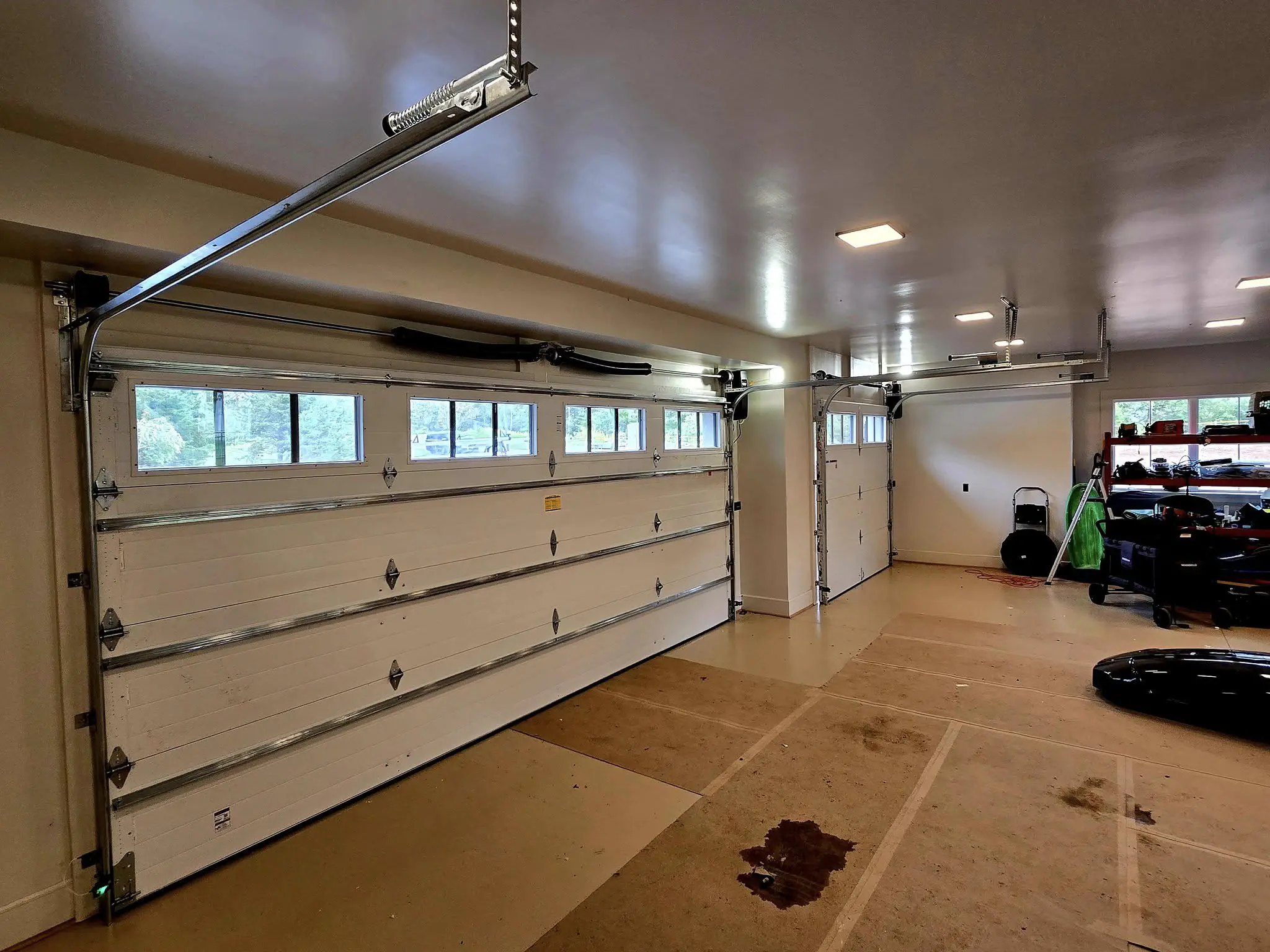
- A gap in the spring coil above the door. A continuous coil that now has a break in it means a broken spring.
- A loose cable hanging, coiled on the floor, or wound unevenly on the drum.
- A roller outside its track, or a door sitting higher on one side than the other.
- A bent or creased panel, particularly in the bottom two sections.
- Nothing visibly wrong, which usually points at the opener or the sensors rather than the door.
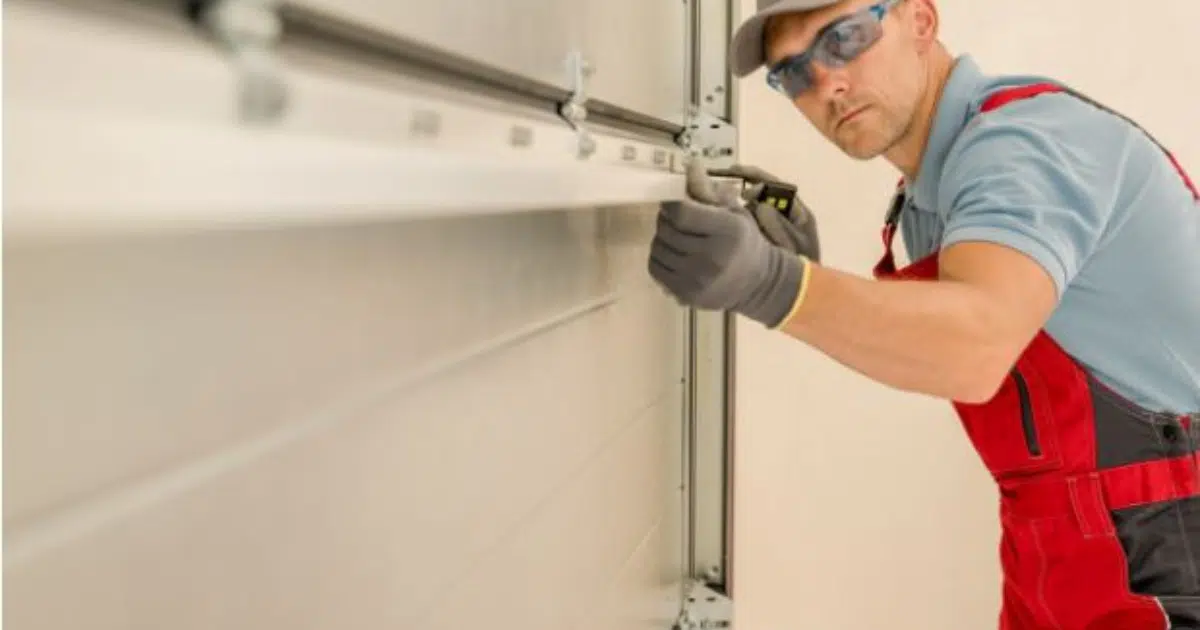
What not to do: Do not put your fingers between the door sections to pull on the door. Do not loosen the bottom brackets at either corner. Do not attempt to adjust or release a spring. The industry’s own guidance is blunt about this. DASMA, the door manufacturers’ association, publishes safety guidance for garage door systems noting that bottom brackets are connected to the springs and are under extreme tension, and that spring systems should only be serviced by trained professionals.
Why spring failures get their own warning: Because they are the most common emergency we run and the most dangerous to touch. The warning signs that a garage door spring is failing usually appear days or weeks ahead of the break, and garage door spring repair is a same-visit job for a technician with the right springs on the truck.
How to tell what broke on your garage door before the technician arrives
Look up first, then along the sides, then at the panels. Springs are above the door, cables run up both sides, rollers sit in the tracks. Working top to bottom in that order takes two minutes and gets you a useful description for the phone call.
4. Leave the emergency release alone unless the door is down and balanced
The red handle is not a repair tool and it is not always safe to pull. This is the step homeowners most often get wrong.
What the release does: It disconnects the door from the opener carriage so the door can be moved by hand. That is all. It does not fix anything, and it does not make a damaged door safe to move.
When it is safe to use:
- The door is fully closed
- Nothing is broken, and the door is simply unpowered
- The path under the door is clear
When it is not safe to use:
- The door is stuck partly or fully open. Pulling the release removes the only thing holding it up, and a door with a broken spring will come down fast.
- A spring is broken or a cable is loose. The release transfers the full weight onto whatever is left.
- The door is off track or hanging crooked. Doors that came off track have their own failure sequence, covered in Why Do Garage Doors Go Off Track After Storms? 6 Causes and What to Do First.
The balance test, if the door is closed and you need to move it: After releasing, lift from the bottom center with both hands. A balanced door feels like forty to fifty pounds and stays put when you stop halfway. If it feels heavy or drops when you let go, put it down and leave it down.
Cables deserve a specific mention here, because they fail quietly and they are what is holding the door when the release is pulled. Timely garage door cable replacement saves money precisely because a worn cable that gets replaced on schedule never becomes an emergency at all.
When not to pull the garage door emergency release
Any time the door is not already down, and any time something is broken. Those two rules cover nearly every situation where people get hurt with the release handle.
5. Photograph everything before you clean up
Insurance adjusters work from evidence, and cleanup destroys evidence. Five minutes with your phone now can be worth a significant part of the repair bill later.
What to capture:
- Wide shots of the whole door and the front of the house
- Close-ups of every damaged panel, bracket, and track
- The broken part itself, if it is visible and safe to photograph from a distance
- Any debris that caused the damage, exactly where it landed
- Water on the floor or staining on the walls, if water is part of the story
- Anything stored in the garage that was damaged
Do not sweep, move debris, or make permanent repairs until you have the photos and have spoken to your insurer. Temporary measures to prevent further damage are expected and usually covered, so save those receipts.
Panel damage specifically: Photograph both sides of any damaged section. What looks like a dent from outside is often a crease from inside, and the difference decides whether a damaged garage door panel can be repaired or needs to come out. If it needs to come out, garage door panel replacement on one or two sections is usually far cheaper than a whole door.
If water is involved: Photograph the water line on the floor and on anything stored there. Water intrusion is a slower-moving problem with its own set of causes, and Can Heavy Rain Damage Your Garage Door? 7 Ways Water Gets In covers what to look for once the emergency is handled.
What photos to take for a garage door insurance claim
Wide, medium, and close, for every damaged component, before anything moves. Adjusters are trying to establish cause, and cause is usually visible in the wide shot rather than the close-up.
6. Secure the opening if the door will not close
An open garage is an open door to the house in most Hill Country homes. If the door will not close and a technician is hours away, deal with the security question directly.
What you can do:
- Lock the interior door between the garage and the house, which many people leave unlocked out of habit
- Move tools, bikes, and anything portable out of view or into the house
- Park a vehicle across the opening if the driveway allows it
- Turn on exterior lighting and leave it on
- Let a neighbor know, which in Boerne is often the most effective option on this list
What not to do: Do not prop the door with a ladder, a jack, or lumber. A propped door is a door waiting to fall on whatever is under it, including whoever is retrieving what they propped it with.
If the cause was a storm, there is a broader sequence worth working through once the immediate emergency is handled, and What Should You Do When a Storm Damages Your Garage Door? 8 Emergency Steps for San Antonio Homeowners lays it out in order.
When to call rather than wait: A door that will not close is one of the four situations we treat as genuine after-hours emergencies, alongside doors off track, broken springs, and trapped vehicles. Our 24/7 emergency garage door service exists for exactly these four.
How to secure a garage that will not close
Lock the connecting door to the house, remove what is worth stealing, light the area, and tell a neighbor. Those four cost nothing and cover most of the actual risk until a technician arrives.
7. Have your information ready when you call
A two-minute phone call with the right details often turns into a one-visit repair. A vague call frequently turns into two.
Have these ready:
- What you saw and heard. A bang during the night, a grinding noise, the door stopping partway. Sounds are diagnostic.
- What the door is doing now. Stuck open, stuck closed, crooked, reverses partway, no response at all.
- The opener brand, usually printed on the motor housing. LiftMaster, Chamberlain, Genie, and Craftsman are the common ones here.
- Approximate age of the door, even a rough guess, since it affects parts availability.
- Whether a vehicle is trapped, which moves you up the priority list.
- Access details. Gate codes, dogs, a long or steep driveway, or anything else that affects a truck getting to you. Rural Kendall County addresses matter here.
- Whether you intend to file an insurance claim, so the estimate can be itemized appropriately from the start.
Ask these in return:
- Whether the technician carries springs, cables, and rollers on the truck
- Whether the quote covers parts and labor
- Whether there is an after-hours charge, and what it is
- Whether the company is licensed and insured, and can show it
Storm season brings out-of-town operators into the area, which makes that last question more important than usual. How to choose a garage door company in San Antonio covers what to verify, and there are a handful of things about garage door services that homeowners should know before the truck pulls up. For non-urgent follow-up work, a scheduled garage door repair visit is usually cheaper than an emergency call.
What to tell a garage door technician when you call for emergency service
Lead with whether anyone is in danger or a vehicle is trapped, then describe the symptom, then the sounds. Dispatchers triage on those three things, and the truck gets loaded based on what you say.
What to handle yourself and what to leave for the technician
Situation | Do this yourself | Leave for the technician | Why |
Door stuck open, nothing obviously broken | Unplug the opener, secure the opening | Diagnosis and repair | The cause may be the opener, the sensors, or the door |
Blinking or dark safety sensors | Wipe the lenses, check alignment | If they still will not clear | Often a genuine five-minute fix |
Broken spring | Nothing. Leave the door closed | All of it, urgently | Extreme stored energy, serious injury risk |
Loose or snapped cable | Nothing. Keep everyone clear | All of it, urgently | The cable carries the door’s weight |
Door off track or crooked | Unplug, photograph, stay clear | All of it, urgently | Uneven load, the door can fall |
Dented or creased panel | Photograph both sides | Assessment and replacement | Sections are structural, not cosmetic |
Vehicle trapped inside | Tell the dispatcher immediately | The release and the repair | Releasing a damaged door can drop it |
Door will not close, house unsecured | Lock the interior door, move valuables | Same-day repair | Security risk plus mechanical failure |
Propping the door with a ladder or lumber | Never | N/A | A propped door is a falling door |
Emergency pricing varies by what failed and whether the visit is after hours. Springs are the most common emergency part, so what it costs to replace a torsion spring on a garage door is a reasonable benchmark, and our Boerne garage door spring repair page covers that service specifically for the area.
The short version
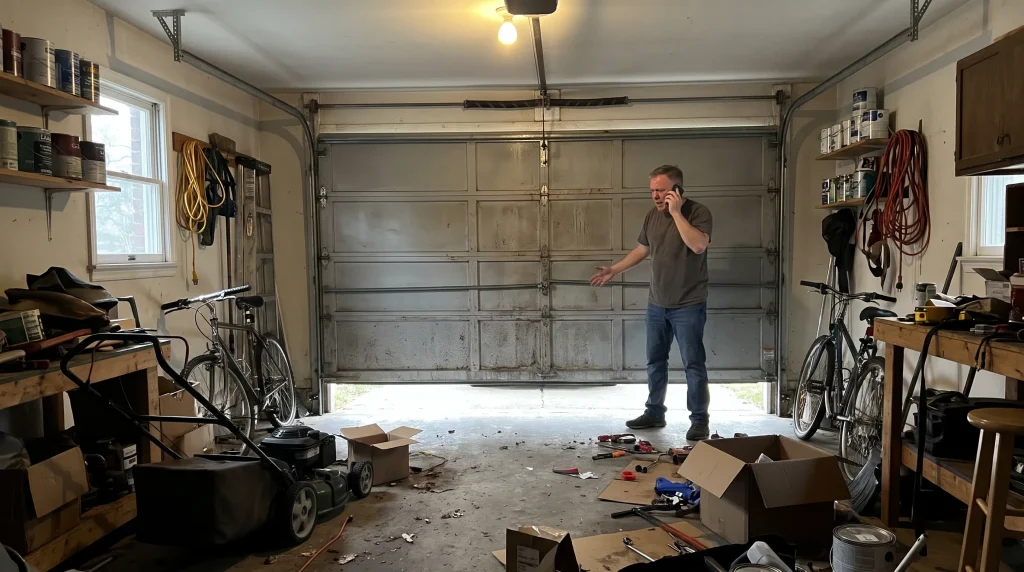
Emergencies feel like they demand action, and with garage doors the opposite is true. The homeowners who come out of this best are the ones who did less: stopped using the door, cut the power, took photos, secured the opening, and made one well-informed phone call. Everything on the mechanical side can wait for someone with the tools to unload a spring safely. Working with local experts for garage door repair matters more after a storm than at any other time, because response time depends on who is actually in the area.
Lincoln Garage Doors LLC provides same-day emergency service throughout Boerne, Kendall County, and greater San Antonio. Our licensed technicians carry springs, cables, rollers, and common hardware on the truck, so the majority of emergency calls are resolved in a single visit. You can see our full local service details on our Boerne page.
Request emergency service or a free written estimate. Tell us if a vehicle is trapped, the door will not close, or weather is on the way, and we will prioritize accordingly.