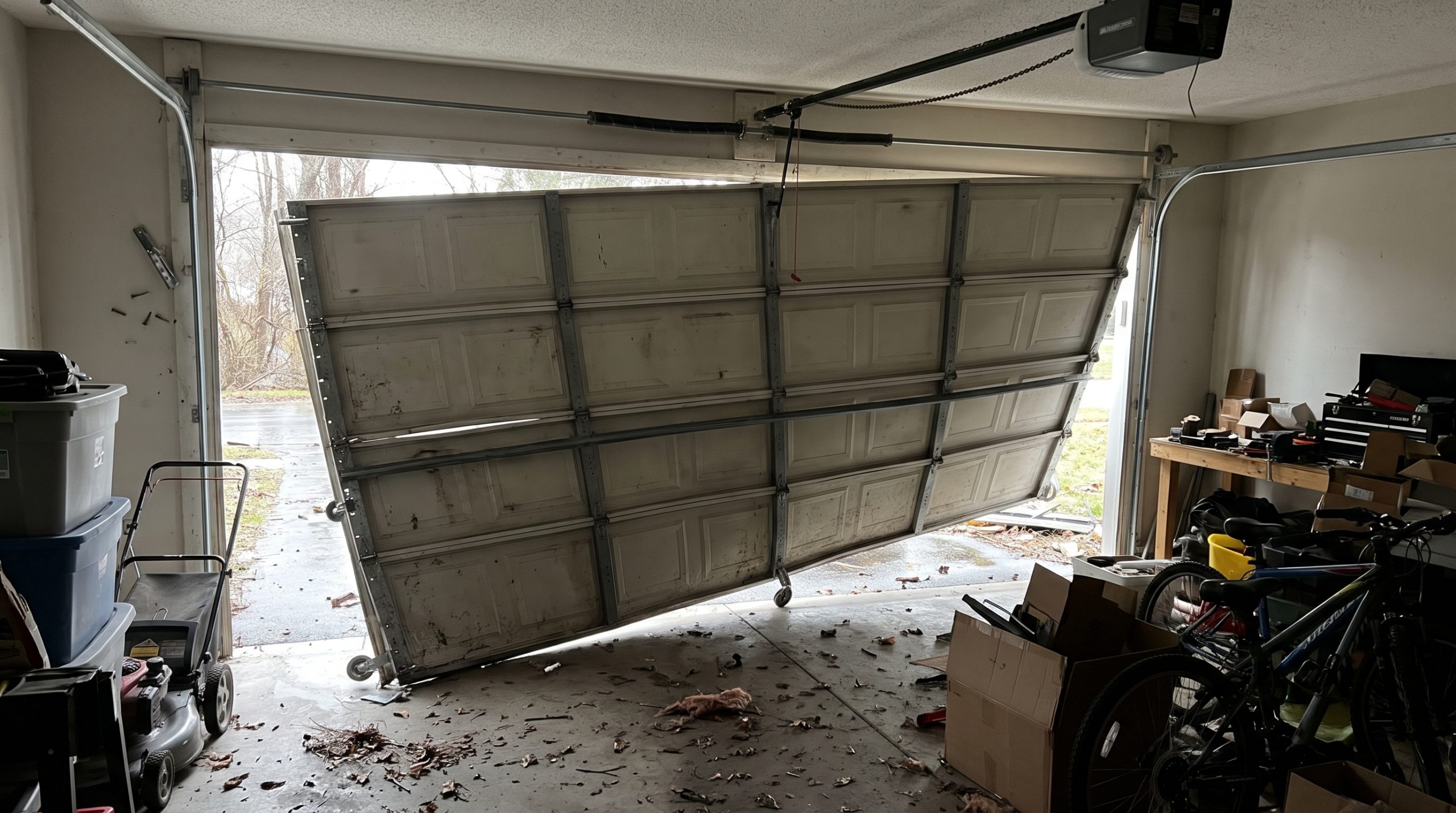
A grinding garage door almost always means metal is contacting metal somewhere it should not. In roughly two out of three cases the source is worn rollers or dry bearings, which is the least expensive repair on this list. The other common sources, in order, are loose hinges and hardware, dry end bearing plates, a stripped opener drive gear, a bent or misaligned track, and a frayed cable or failing spring. The cheapest way to narrow it down takes about a minute: close the door, pull the red emergency release cord, and move the door by hand. If it still grinds, the problem is in the door hardware. If it goes quiet, the problem is inside the opener.
Key takeaways
- Grinding is a mechanical contact noise, not a normal operating sound. It always has a physical cause and it always gets worse.
- The manual test separates door problems from opener problems in under a minute and costs nothing.
- Rollers and hinges are the two cheapest causes and the two most common. Catching them early is what keeps the bill small.
- Cable and spring noises are the most expensive and the most dangerous. Stop using the door if you suspect either.
- Ignoring a grind is what turns a low-cost roller job into a roller, cable, and track job.
- Lubricant is not a fix for grinding. It is a fix for squeaking. If a spray quiets a grind, it is masking wear, not repairing it.
First, find out where the noise is coming from
Before spending anything, run this. It is the same first step a technician performs on arrival.
- Close the door completely.
- Pull the red emergency release cord to disconnect the opener trolley.
- Lift the door slowly by hand to about waist height, then lower it.
- Listen. Grinding with the opener disconnected means the noise is in the rollers, hinges, bearings, track, cables, or springs. Silence when moved by hand, but grinding under power, means the noise is in the opener itself.
- Reconnect the opener when you are done.
That single test cuts the list of six causes roughly in half. It is worth knowing the correct name for each part before you call anyone, and the Door & Access Systems Manufacturers Association publishes the industry terminology and technical guidance that installers and inspectors work from.
Here are the six causes, ordered by how often they turn out to be the answer.
1. Worn or dry rollers
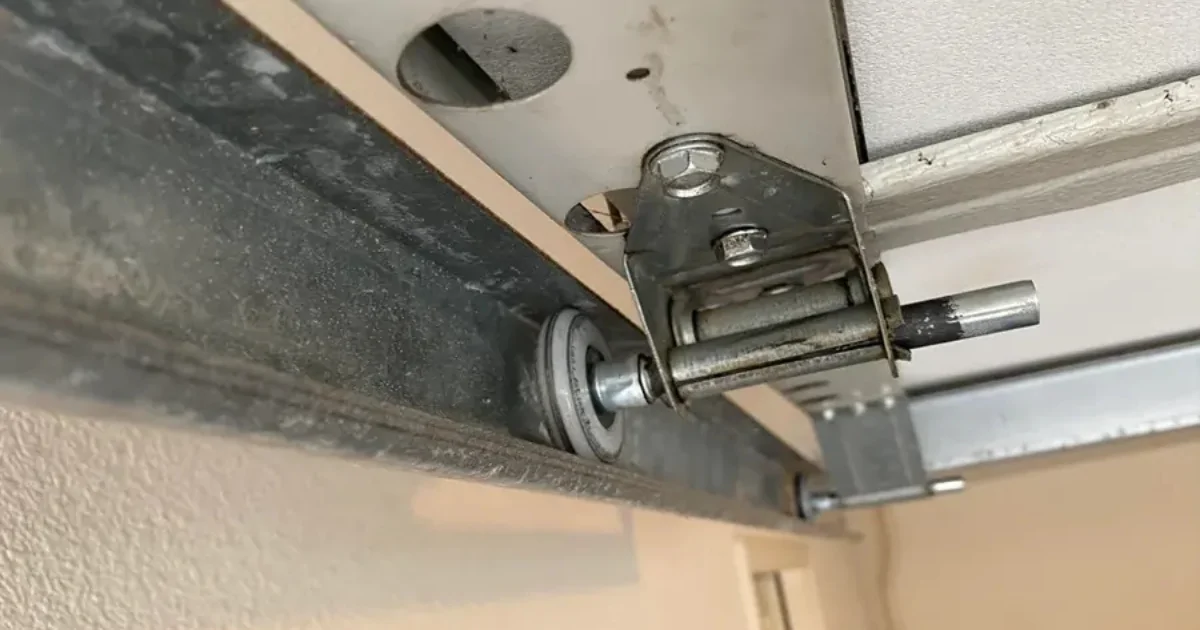
Why worn garage door rollers cause a grinding noise
Symptom: a rhythmic grinding or scraping that rises and falls as the door travels, often loudest as the rollers pass through the curved section of track.
Most likely cause: the nylon tire has flat-spotted or cracked, or the bearing inside the stem has lost its grease and is now sliding instead of rolling. In San Antonio this is accelerated badly by summer heat, which is why so many of these calls cluster between June and September. The full breakdown of that failure pattern is in How Does Texas Heat Damage Garage Door Rollers? 7 Signs It’s Not Your Springs.
Fix steps:
- With the door closed, inspect every roller you can see. A healthy roller spins freely when nudged.
- Look for flat spots, cracks, or a tire that has shifted off center on the stem.
- Check the track for fine black or gray dust, which means material is actively shedding.
- Apply garage door lubricant to the bearing at the base of the stem on steel rollers only. Never lubricate nylon tires and never lubricate the track.
Call a pro if: more than one or two rollers are worn, or if the affected roller sits in the bottom bracket, which is under full cable tension and must not be removed by hand.
Cost tier: lowest on this list. Rollers are inexpensive parts and the labor is straightforward. Our detailed walkthrough of the job is in replacing garage door rollers.
2. Loose or worn hinges and hardware
How to fix a grinding garage door caused by loose hinges
Symptom: a grinding or clunking that happens at the same two or three points in the door’s travel, usually where the sections bend around the curve.
Most likely cause: the hinge pins have worn oval, or lag bolts and brackets have loosened from years of vibration. Once a hinge has play in it, the section shifts slightly under load and the hinge leaves grind against each other.
Fix steps:
- With the door closed, inspect each hinge for elongated pin holes or visible cracks in the metal.
- Snug any obviously loose bolts. Do not overtighten, because that pulls the track out of alignment and creates a new problem.
- Lubricate the hinge pins with a garage door specific product.
- Check the numbers stamped on the hinges if you are replacing any. Hinges are numbered by position and are not interchangeable.
Call a pro if: a hinge is cracked, a bolt spins without tightening, or the hinge has torn the sheet metal of the door section. Torn metal usually means the door has been fighting a bind for a long time.
Cost tier: low. Hinges are inexpensive and most are accessible. Staying ahead of this is straightforward, and the basics are covered in our garage door maintenance tips.
3. Dry or failing end bearing plates
Why a garage door grinds at the top when opening
Symptom: a continuous metallic grinding or growling that comes from high on the wall above the door, near the ends of the spring shaft, and continues through the whole travel rather than pulsing.
Most likely cause: the bearings that support the torsion shaft have run dry or worn out. This is a distinct sound from roller noise. It comes from one fixed location instead of moving with the door.
Fix steps:
- Stand back and listen with the door in motion. If the noise stays in one spot high on the wall, this is your cause.
- Do not climb a ladder to inspect the shaft while the door is under tension.
- This is where homeowner diagnosis should stop.
Call a pro if: you have confirmed the noise is coming from the bearing plates. That is the entire recommendation here. The bearing plates sit on the same shaft as the torsion springs, and there is no way to service them without controlling spring tension first.
Cost tier: moderate. The parts are cheap, but the labor requires unwinding and rewinding the springs safely.
4. A stripped or worn opener drive gear
What a grinding garage door opener that will not move means
Symptom: the motor runs and you hear grinding, but the door barely moves or does not move at all. Critically, this noise disappears when you disconnect the opener and move the door by hand.
Most likely cause: the plastic drive gear inside the opener head has stripped its teeth. This is a wear item on chain drive units and it is one of the most predictable failures in the whole system. A worn sprocket or a loose chain produces a similar but usually looser, rattling sound.
Fix steps:
- Confirm with the manual test. Door quiet by hand plus grinding under power equals opener.
- Check whether the chain or belt has excessive slack.
- Look for plastic shavings on the floor beneath the opener head, which is the giveaway for a stripped gear.
Call a pro if: you find shavings, or the motor hums without turning the sprocket. Also stop here if the opener is more than about fifteen years old, because a gear repair on an aging unit often costs a meaningful fraction of a new one.
Cost tier: moderate for a gear kit, higher for a full unit. That repair-or-replace decision is worth thinking through, and we broke it down in is it cheaper to repair or replace a garage door opener. If the unit is past saving, garage door opener installation is usually the better value.
5. A bent, misaligned, or obstructed track
How to fix a garage door grinding against a bent track
Symptom: grinding concentrated at one specific height every single cycle, often with visible shudder, and sometimes with the door rubbing one side of the opening.
Most likely cause: the track has been struck, a bracket has shifted, or debris has lodged in the channel. Heat expansion can also narrow the clearance enough to cause contact in a track that was already marginal.
Fix steps:
- Close the door and sight down the vertical track from floor level. It should be straight and parallel to the door edge.
- Clear any debris with a dry cloth. Do not lubricate the track.
- Look for shiny scrape marks on the inside of the channel, which mark exactly where the contact is happening.
- Do not attempt to hammer or bend a track back into shape. Track steel does not return to its original geometry once creased.
Call a pro if: you see a visible crease, the door has come off the track, or the door binds hard enough to stall the opener. A door off track carries its weight unpredictably and can fall. Our guide on how to fix a garage door off track explains why this one is not a DIY job.
Cost tier: varies widely. A bracket adjustment is minor. A replacement track section is moderate. If the track damage has already creased or cracked the door sections, a garage door replacement may be the more economical path than repeated repairs.
6. A frayed cable or a failing spring
What a grinding or popping noise from garage door cables and springs means
Symptom: a grinding, popping, or snapping sound near the bottom corners or from the spring shaft, often paired with the door moving unevenly or one side lagging behind the other.
Most likely cause: the lift cable has frayed and is no longer spooling cleanly on the drum, or a spring is fatigued and the coils are binding against each other. This is the most serious cause on this list and the one that most often precedes a sudden failure.
Fix steps:
There are no homeowner fix steps for this one, and that is deliberate. What you should do:
- Stop using the door.
- Do not pull the emergency release and manually lift a door with a suspected broken spring. It may weigh well over a hundred pounds unassisted.
- Keep children and vehicles clear of the opening.
- Call a technician.
Call a pro if: you see any of the following. A visible gap in a torsion spring coil. Cable strands sticking out like a wire brush. Cable slack hanging beside the drum. One side of the door sitting lower than the other. Additional warning signs are listed in common garage door spring failure signs.
Cost tier: highest on this list, for both parts and labor, because of the tooling and risk involved. Cable work falls under garage door cable repair, and we published typical figures in how much does it cost to fix a broken cable on a garage door. Spring work falls under garage door spring installation.
Cost and urgency at a glance
Cause | Relative cost | How urgent | Safe to DIY? |
Worn or dry rollers | Lowest | Within a few weeks | Inspection yes, replacement borderline |
Loose or worn hinges | Low | Within a few weeks | Tightening yes, replacement borderline |
Dry end bearing plates | Moderate | Within days | No |
Stripped opener gear | Moderate to high | Door is already unusable | No |
Bent or misaligned track | Varies | Within days | No |
Frayed cable or failing spring | Highest | Stop using the door now | Absolutely not |
How to keep it from coming back
Most grinding noises are preventable, and the prevention is not complicated. Twice a year, inspect the rollers and hinges, tighten what is visibly loose, wipe the tracks dry, and lubricate bearings, hinges, and springs with a garage door specific product. In South Texas the natural checkpoints are late spring and early fall, which lines up with the seasonal walkthrough in What Should Be on Your Garage Door Storm Prep Checklist? 8 Checks Before Texas Storm Season.
Timing matters more here than in milder climates. Extreme heat accelerates roller and bearing wear, and severe storms are what bend tracks and dent panels in the first place. Watching local conditions through the National Weather Service is a reasonable way to know when to schedule that inspection.
Where these calls come from around San Antonio
Grinding calls are not evenly distributed. Newer neighborhoods with oversized double doors, west facing garages, and uninsulated panels generate a disproportionate share, because the same door hardware is carrying more weight through hotter daily cycles. For a neighborhood level view, see What Are the 7 Most Common Garage Door Problems in Stone Oak Homes?
Whichever part of town you are in, the pattern is the same: the noise is cheap to fix early and expensive to fix late. We wrote about that compounding effect in the dangers of delaying garage door repairs in San Antonio.
Get the grinding diagnosed before it costs more
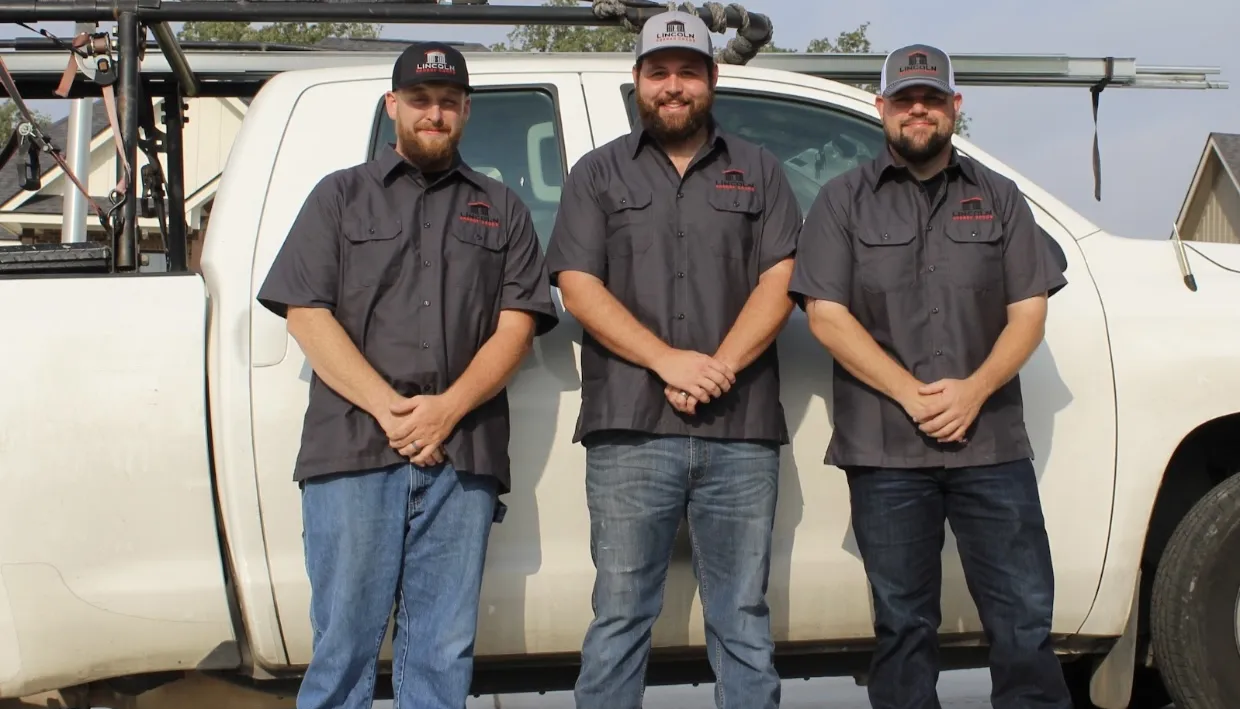
A grinding garage door is not a noise problem. It is a wear problem that happens to be audible, and every cycle you run makes it slightly worse. The difference between a roller job and a roller, cable, and track job is usually a few months of ignoring it. Lincoln Garage Doors LLC provides same day diagnostics across San Antonio from licensed technicians, with the cause identified and priced before any work begins. Book a same day garage door diagnostic or request a free quote.