A garage door spring does more work than most people realize, and the moment it breaks, the entire door becomes a serious hazard that demands immediate attention. Attempting garage door spring repair without professional training puts lives at risk and almost always leads to damage that costs far more to fix than the original problem.
The tools required for this job are specialized, the tension involved is extreme, and one miscalculation can bring a 400-pound door crashing down without warning. This guide explains exactly why this repair belongs in the hands of a licensed technician and what happens when homeowners try to handle it themselves.

What Causes Garage Door Springs to Break?
Garage door springs don’t fail without reason, and each breakdown can be traced back to a specific condition that quietly weakened the coil over time until the stress became too much for the metal to handle.
Common reasons garage door springs break include:
- Torsion springs have a rated cycle limit, and once reached, the metal snaps
- Springs without lubrication develop rust that eats through the metal
- Temperature extremes in San Antonio accelerate metal wear
- Incorrect sizing or tension settings cause premature deterioration
- Skipping routine maintenance allows small issues to build up until failure
To understand what drives each of these failure points in greater detail, read our guide on What Causes Garage Door Spring Repair Issues?, which breaks down every root cause and what homeowners can do to reduce the risk of an unexpected breakdown.
What Are the Signs of a Broken Garage Door Spring?
A broken garage door spring leaves behind clear warning signs that point directly to the problem before the door stops working completely.
Signs of a broken garage door spring include:
- The door feels unusually heavy during a manual lift test
- A loud bang or snap coming from the garage signals that a spring has given out
- The door opens unevenly, tilts to one side, or stops midway
- The garage door opener strains harder than usual or stops mid-cycle
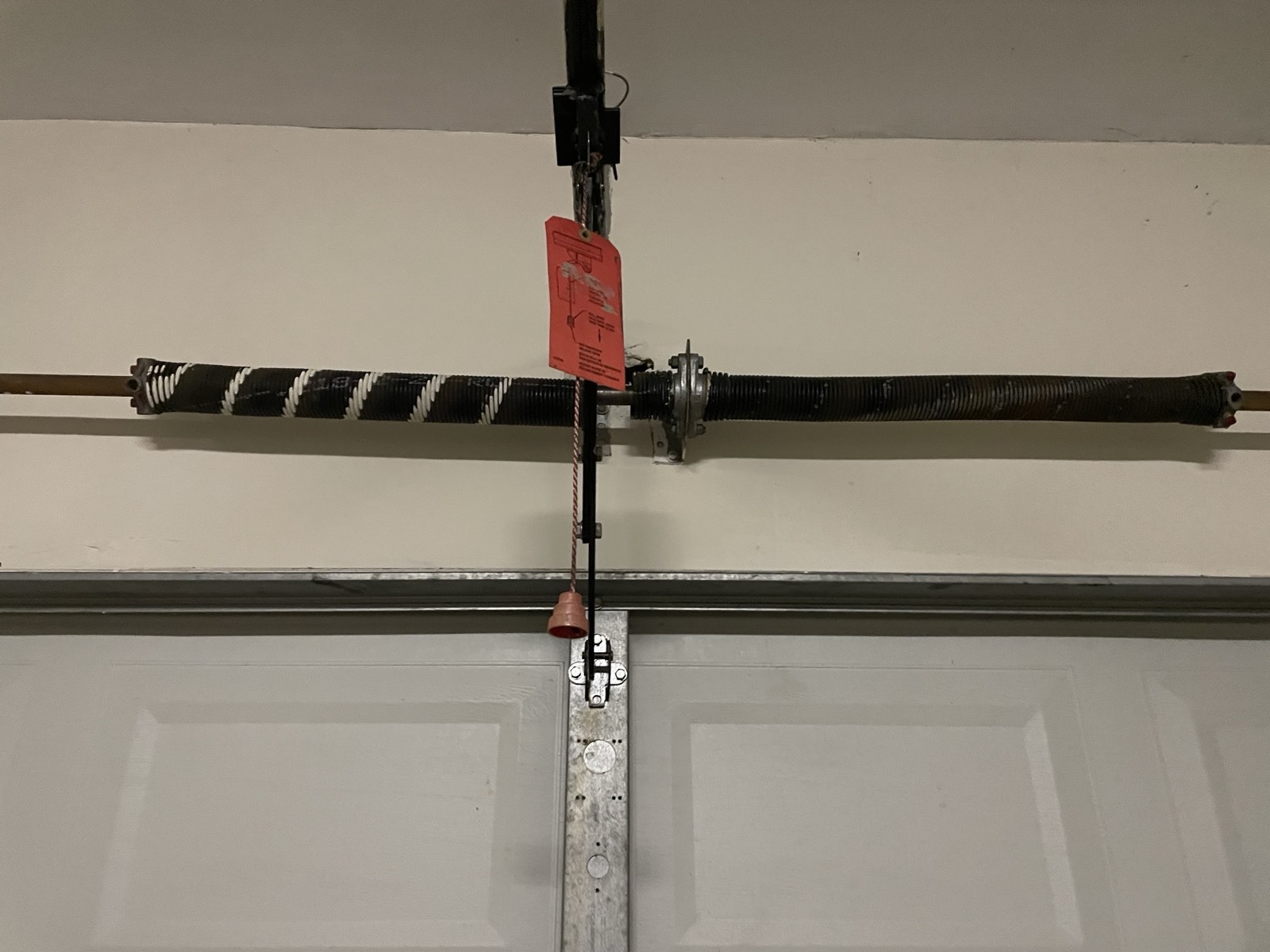
- A visible gap, stretch, or separation in the spring coil confirms a break
To get a complete picture of what each warning sign means and how to respond, read our guide on Signs That Indicate a Garage Door Spring Repair Is Needed, which walks through every indicator and explains the right course of action for each one.
What Makes Garage Door Spring Repair More Complex Than It Looks?
Garage door spring repair goes far beyond swapping a broken part, and the technical demands make it too risky for an untrained hand.
What makes this repair more complex than it looks:
- Torsion and extension springs each require different tools and techniques
- Every spring must match the exact door weight and height, or balance is lost
- Correct tension requires specialized tools and precise calculations
- One miscalibration strains the cables, rollers, tracks, and opener
- Stored energy in a wound spring can cause serious injury if mishandled
To see how these complexities play out on a door that is already compromised, read our guide on Can a Garage Door Be Lifted With a Broken Spring?, which covers what happens when the system runs without a functioning spring.
What Happens When a Broken Spring Is Left Unrepaired?
Every broken garage door spring left unaddressed causes more damage to the system with each passing day.
What happens when a broken spring is left unrepaired:
- The door becomes completely inoperable and unsafe to use
- The opener motor burns out, lifting the full door weight without spring support
- Cables, rollers, and tracks wear down rapidly under the added stress
- The door loses its ability to close fully, exposing the home to security risks
- Components that could have been saved fail permanently the longer the problem sits unaddressed
Addressing a broken spring immediately is always less expensive and less disruptive than waiting for the damage to spread across the entire system.
Why Garage Door Spring Repair Should Never Be a DIY Job
Extreme Tension That Can Cause Serious Injury or Death
Every coil in a garage door spring stores enough mechanical force to send metal components flying at lethal speed the moment control is lost.
Reasons extreme spring tension is life-threatening:
- Hundreds of pounds of stored energy are released instantly when control is lost
- A slipping winding bar can break bones or cause permanent eye damage
- Releasing tension without the correct tools triggers an uncontrolled discharge
- Even a partially wound spring causes serious injury on contact
- Professionals use safety cables and locking clamps to control tension at every step
No amount of caution makes up for the lack of proper tools and training when handling high-tension spring systems.
A Crashing Door Can Trap or Crush Anyone Nearby
Without a properly tensioned spring to counterbalance the load, a garage door becomes a 400-pound hazard that can drop without warning.
What makes a crashing door so dangerous:
- Removing the old spring leaves nothing holding the door up
- Improvised support under the door is not rated for that load
- A dropping door generates enough force to crush a person or a pet instantly
- Risk peaks during the transition between the old and the new spring installation
- Professionals secure the door with locking clamps before removing any component
Handling that much dead weight without the correct securing equipment is a risk no untrained person should take.
Complex Calibration That Most Homeowners Get Wrong
Achieving the correct spring tension requires more than turning a winding bar a few times, and a single miscalibration affects every component connected to it.
Factors that make calibration a job for trained technicians:
- Each door requires a specific number of winding turns based on height and weight
- Too little tension causes the door to slam shut or fail to open
- Excessive tension strains the garage door opener, cables, and tracks
- Miscalculation goes undetected until other components show visible damage
- Correct calibration requires a manual balance test most homeowners have never performed
Calibration is a trained skill built on years of hands-on experience, and guessing the correct tension puts the entire door system at immediate risk.
Further Damage to Cables, Tracks, Rollers, and Openers
An improperly installed spring transmits mechanical stress to every connected component, and the damage spreads quickly throughout the system.
How a bad installation affects the system:
- Improperly seated cables slip off the drum and wrap around the shaft
- Tracks absorbing uneven force bend out of alignment
- Rollers under incorrect tension crack and wear ahead of schedule
- The opener motor overheats, compensating for the imbalance
- Hinges and brackets loosen faster under irregular loads
Every component depends on the spring being installed correctly, and a single error can trigger a chain reaction that grows with each cycle.
Voided Warranties and Insurance Coverage
A DIY spring repair can strip away the protections that cover both the door system and the home itself.
What homeowners stand to lose:
- Manufacturer warranties become void after unauthorized repairs
- Insurance policies may deny claims linked to amateur spring work
- Injury or property damage during DIY falls entirely on the homeowner
- Unauthorized repair documentation makes warranty reinstatement nearly impossible
- A licensed technician provides written proof that keeps all coverage intact
Protecting warranty and insurance coverage is one of the most overlooked reasons to always call a professional for garage door spring repair.
Why This Repair Should Always Be Handled by a Professional
Hiring a licensed professional is the only choice that guarantees the repair is done correctly, and everyone stays protected.
Reasons this repair should always be handled by a professional:
- Licensed technicians carry specialized tools unavailable at hardware stores
- Professionals match the correct spring to the door’s exact specifications
- A post-installation balance test confirms proper tension and smooth operation
- Professional garage door repair comes with documented warranty protection
- Liability insurance covers any accidental damage during the job
Every homeowner deserves peace of mind knowing the repair was handled by someone with the training, tools, and accountability to get it right.
How a Professional Handles Garage Door Repair and Spring Replacement
A professional visit follows a deliberate process that goes far beyond what any homeowner can replicate without proper training.
How a professional handles garage door repair and spring replacement:
- Full system inspection comes before any component is touched
- Spring specs are measured against door weight, height, and drum size
- Both springs are replaced together to maintain balance and prevent repeat failures
- Tension is wound to the exact turns required by the door’s specifications
- A mid-height balance test confirms the system is properly calibrated
Every step in the process is designed to protect the door, the opener, and the people who use the garage every day.
How Much Does Garage Door Spring Repair Cost?
Garage door spring repair costs vary from job to job, depending on factors every homeowner should understand before scheduling a service visit.
Factors that influence the cost of garage door spring repair:
- Torsion springs cost more to replace than extension springs due to job complexity
- Replacing both springs at once costs less than two separate service visits
- Door weight and height directly affect spring specifications and parts pricing
- Emergency or after-hours calls carry a higher rate than standard appointments
- Additional damaged components found during inspection add to the final total
Understanding these factors helps homeowners make informed decisions before committing to a technician.
How to Prevent Garage Door Spring Problems in the Future
Taking a few proactive steps throughout the year goes a long way in extending spring life and avoiding unexpected failures.
Ways to prevent garage door spring problems in the future:
- Schedule a professional inspection at least once a year to catch wear early
- Apply silicone-based lubricant to the springs every three to six months
- Listen for grinding or squeaking sounds that signal early coil wear
- Avoid forcing the door when it shows signs of resistance or imbalance
- Keep the tracks clean to reduce unnecessary strain on the springs
Consistent garage door maintenance extends the life of the entire system and reduces the need for emergency repairs over time.
Leave Garage Door Spring Repair to the Professionals Who Know How to Do It Right
Garage door spring repair is one of the most technically demanding and physically dangerous jobs in any home, and no tutorial or basic tool kit can replace the training a licensed technician brings to every job. Every warning sign and every risk covered in this guide points to the same answer: this is not a job for an untrained hand.
Lincoln Garage Doors LLC is a trusted name in San Antonio, TX, for homeowners who refuse to gamble with the safety of their home and family. Contact us or give us a call today, and let our team of licensed technicians inspect, repair, and restore your garage door system to full working order with the precision and care it deserves.