Quick answer
To test your garage door’s balance, close the door, pull the red emergency release cord, and lift the door by hand to about halfway. Then let go carefully. A balanced door stays in place or drifts only slightly. If it falls, the springs are weak. If it rises, the springs have too much tension. Either result means the springs need professional adjustment, because an unbalanced door strains the opener and can drop without warning. The whole test takes about two minutes and needs no tools.
Key takeaways
- What balance means: the springs, not the opener, should carry the door’s weight.
- The test: door closed, opener disconnected, lift to halfway, let go, watch.
- Stays put: balanced. Falls: springs too weak. Rises: springs too tight.
- Stop right away if the door feels extremely heavy. That usually means a broken spring.
- Never adjust springs yourself. They hold enough tension to cause serious injury.
- Test monthly, and again after a cold front or any time the door starts acting differently.
1. Know the signs your garage door is out of balance
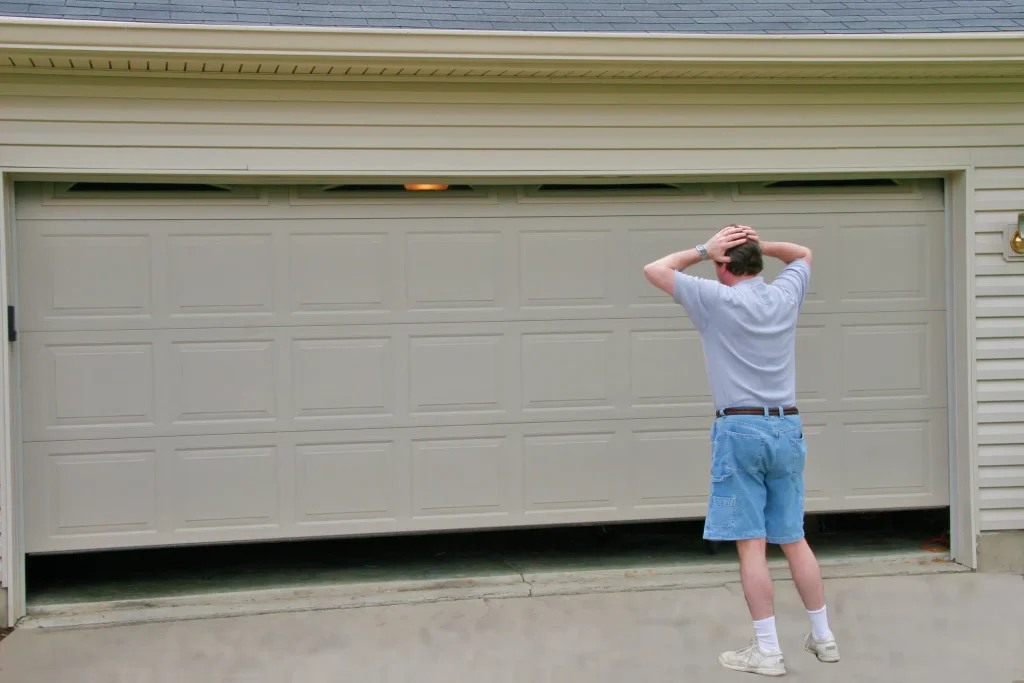
An unbalanced door usually gives warnings before it fails. If you notice any of these, run the balance test this week.
Why an unbalanced garage door is a safety risk
Warning signs:
- The door feels heavy or hard to lift by hand.
- It closes faster than it used to, or slams the last few inches.
- One side sits lower than the other when the door is closed.
- The opener strains, slows down, or reverses for no clear reason.
- You hear new grinding or creaking from the springs.
Why it matters: springs are supposed to carry nearly all of the door’s weight. When they weaken, the opener and the rest of the hardware take on that load. A typical steel door can weigh well over 100 pounds, and an unbalanced one can drop fast if a part gives out.
These signs overlap with the most common garage door spring failure signs, so it helps to know both. An unbalanced door also wears out a garage door opener much sooner, because the motor ends up lifting weight the springs should carry.
2. Step 1: Close the door and pull the emergency release
Always start with the door fully closed. Releasing the opener with the door open can let it drop if a spring is weak or broken.
How to safely disconnect a garage door opener for a balance test
- Close the door completely with the opener.
- Unplug the opener or switch off its circuit so no one presses the button mid-test.
- Find the red emergency release cord hanging from the opener rail.
- Pull it down and back toward the motor until the trolley disconnects.
- Keep children and pets out of the garage until you’re done.
Stop if: you see a gap in a torsion spring above the door or a cable hanging loose. That usually means a broken spring. Don’t try to lift the door. Here’s why you shouldn’t count on whether a garage door can be lifted with a broken spring.
3. Step 2: Lift the door by hand to the halfway point
Halfway is where an unbalanced door shows its problem most clearly. Lift slowly and keep your hands in safe spots the whole time.
How to lift a garage door by hand without getting hurt
- Use the lift handle or a gripping point on the bottom section.
- Keep your fingers out of the joints between sections. They close like scissors as the door moves.
- Lift with your legs, not your back.
- Raise the door until the bottom edge is about waist high, or roughly halfway up the opening.
Stop if: the door feels extremely heavy, won’t lift past a foot or two, or one side rises faster than the other. Lower it gently and call a technician.
The balance test is one of eight checks in our Garage Door Safety & Preventative Maintenance Guide for Texas Homeowners, which covers the rest of the routine.
4. Step 3: Let go and watch what the door does
This is the actual test. Let go carefully, keep your hands near the handle, and watch for about five seconds.
What a garage door balance test result means
- The door stays put or drifts a few inches: it’s balanced. Small drift is normal.
- The door falls toward the floor: the springs have lost tension. This is the most common result on older doors.
- The door rises toward the open position: the springs have too much tension, often after a past adjustment was overdone.
For a fuller picture, repeat the test at about knee height and at about three-quarters open. A well-balanced door stays put at all three heights.
Springs lose strength with every cycle, so how long a garage door spring can last comes down mostly to use. Heat, rust, and heavy use all add stress that affects a garage door spring. The trade association that sets door safety standards explains the hazards in DASMA’s garage door safety tips, including what an out-of-balance spring system feels like in use.
5. Step 4: Reconnect the opener and run the safety tests
Once you’ve seen the result, lower the door gently and reconnect the opener. Then use the moment to run the two opener safety tests, since you’re already in the garage.
How to reconnect a garage door opener after a balance test
- Lower the door by hand until it’s fully closed.
- Plug the opener back in or switch its circuit back on.
- Press the wall button. The trolley will travel along the rail and click back into place.
- Run the door through one full open-and-close cycle.
- Photo-eye test: close the door and pass a broom handle through the beam near the floor. The door should reverse.
- Contact test: lay a 2×4 flat in the door’s path. The door should touch it and reverse.
If the door won’t reverse during the photo-eye test, check how to tell if garage door sensors are aligned. For a step-by-step seasonal routine with photos, see Bob Vila’s garage door maintenance checklist.
6. Step 5: Call a pro if the door fails
A door that falls or rises needs a spring adjustment or new springs. That work belongs to a trained technician, every time.
Why you should never adjust garage door springs yourself
The risk: torsion springs are wound under extreme tension, and the bottom brackets and cables are connected to that tension. A slipped winding bar or a loosened bracket bolt can release that energy all at once.
What a technician does:
- Checks whether the springs are worn out or just out of adjustment
- Matches the spring size to the door’s actual weight
- Inspects the cables, drums, bearings, and bottom brackets that work with the springs
- Rebalances the door and retests it at several heights
A failed test usually traces back to a few common causes of garage door spring repair issues. Book garage door spring repair if the springs are the problem, or general garage door repair if the cables, drums, or tracks are involved too. Those supporting parts often wear out alongside the springs, and The Most Overlooked Garage Door Parts That Cause Costly Repairs covers which ones to watch.
Changed a section recently? A replacement panel that weighs more or less than the original can throw off the balance. After garage door panel replacement, the springs should be checked and rebalanced to match.
Door keeps going out of balance? If an older door needs new springs, cables, and sections every year or two, a new garage door may cost less over time. Professional garage door installation sizes the springs to the new door’s exact weight from day one.
Door stuck or spring snapped? Leave the door closed and don’t run the opener. 24/7 emergency garage door service can get it safely working again.
7. How often to run a balance test in South Texas
Once a month is the standard. In South Texas, also test after the first cold front of the season and any time the door starts sounding or moving differently.
When to test garage door balance through the year
- Monthly: pair it with your photo-eye and contact tests. All three take under five minutes.
- After the first cold front: sudden temperature drops are hard on worn springs. Run the test the first chilly weekend of fall.
- After a freeze or ice event: check the door before you use it normally again. Watch local alerts from the City of San Antonio so you know when a hard freeze is coming.
- After any repair: new rollers, cables, or a replaced section can change how the door hangs.
- Any time the door changes: new noises, slower movement, or a crooked bottom edge.
The balance test is also part of getting ready for winter. Our seasonal checklist is in Preparing Your Garage Door for Cooler Weather in South Texas. For more seasonal garage projects, browse the This Old House garage maintenance guides.
Once a year, have a technician do a full inspection. A professional garage door maintenance visit includes a balance check at several heights, plus the spring and cable wear you can’t see from the floor.
Balance test results at a glance: DIY or call a pro
The test is safe for any homeowner. Fixing a failed result is not.
What the door does | What it means | DIY safe? | What to do |
Stays put or drifts a few inches | Balanced | Yes | Reconnect the opener and retest next month |
Falls toward the floor | Springs have lost tension | No | Call a technician for spring adjustment or replacement |
Rises toward open | Springs have too much tension | No | Call a technician to rebalance the springs |
One side rises faster | Uneven spring or cable problem | No | Stop and call a technician |
Feels extremely heavy or won’t lift | Likely broken spring | No | Leave it closed and call a technician |
Balanced but noisy or jerky | Worn rollers, hinges, or dry lubricant | Yes, partly | Lubricate; call a pro if noise continues |
Two minutes that protect your family and your opener
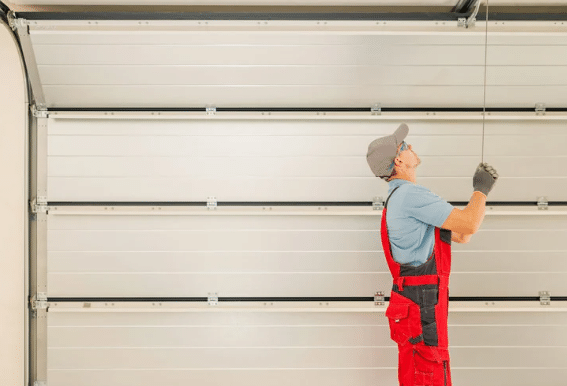
The balance test is the quickest way to find out if your springs are doing their job. If the door stays put, you’re done until next month. If it falls, rises, or feels heavy, the springs need attention before they fail on their own schedule.
When the test turns up a problem, let a licensed technician from Lincoln Garage Doors LLC take it from there. We’ll check the springs, cables, and hardware, rebalance the door, and retest it before we leave.
Book your garage door balance check today and get an upfront quote before any work begins.