A loud bang from the garage is often the first sign that a garage door spring has broken. This component plays a critical role in the overall system, yet it usually goes unnoticed until a problem occurs. The spring is responsible for balancing the full weight of the door, which can reach hundreds of pounds. When the spring fails, that balance disappears, leaving the door extremely heavy and difficult, or sometimes impossible, to lift.
Garage door springs operate under constant and intense tension, with each garage door spring holding a large amount of stored energy to support the door’s movement. When one snaps, all of that force is released in a single, sudden moment. Broken pieces can be thrown with enough power to cause serious injury or significant property damage. Understanding why this essential part can fail without warning helps explain the risks involved and highlights the importance of maintaining safe and reliable garage door operation.
How Garage Door Springs Work in San Antonio Homes
In many San Antonio homes, the garage door spring system does most of the real work when the door opens and closes. While an automatic opener starts the motion, the springs supply the strength needed to lift and lower the door smoothly. These components are part of the garage door’s core hardware and are selected to match the door’s size and overall weight, which allows the system to move in a controlled and balanced way.
Most residential garages use one of two spring designs: torsion springs or extension springs. Although they operate differently, both serve the same purpose by making a heavy door feel light and manageable. The type installed in a home depends on the door’s construction and weight. Understanding how each system functions helps explain how the garage door moves so easily during everyday use.
For more insight into early warning clues, explore our blog titled “What Are Common Garage Door Spring Failure Signs?”
Types of Garage Door Springs Commonly Found in Texas Garages
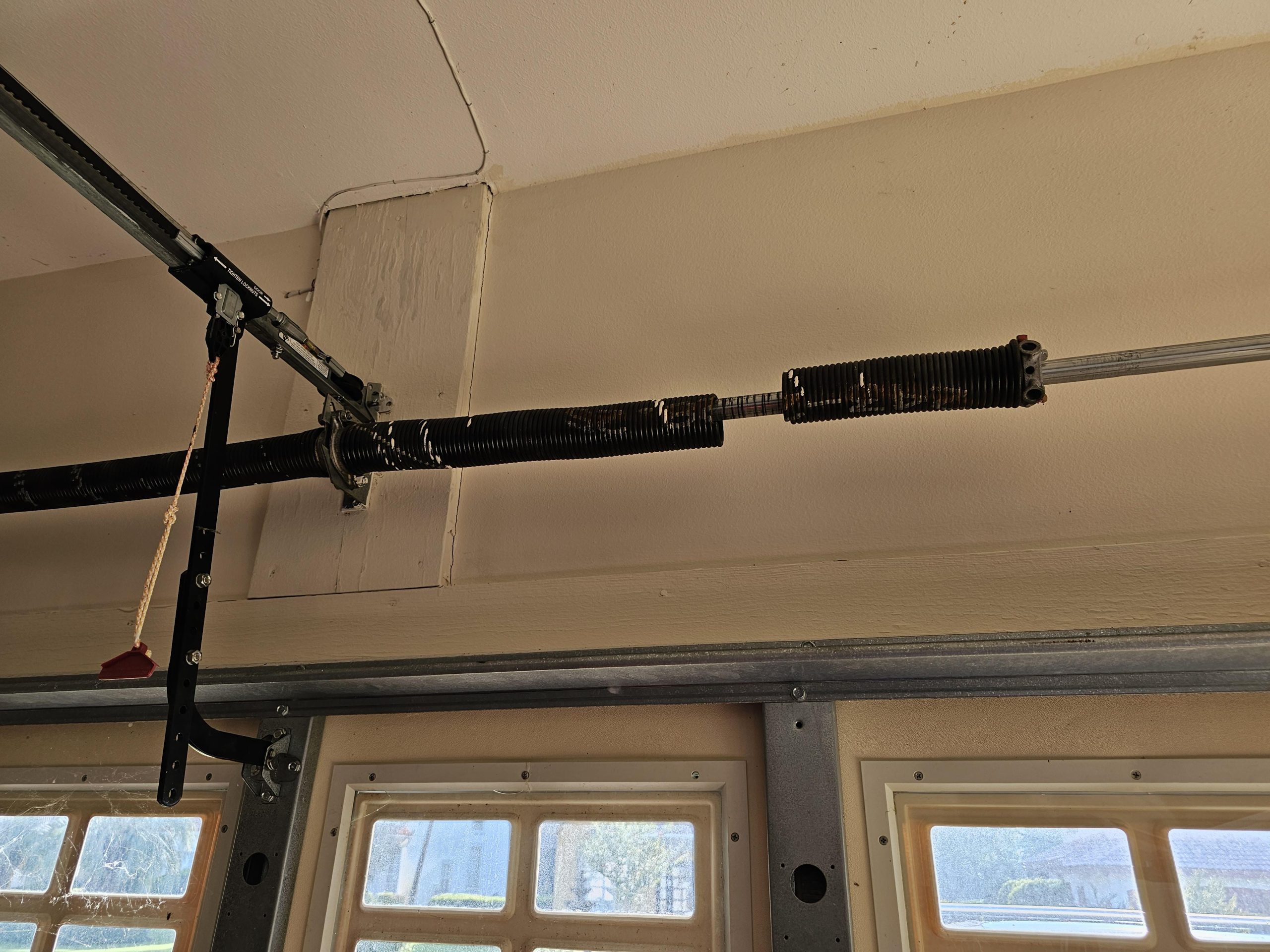
Texas garages typically use either torsion springs or extension springs to support door movement. Torsion springs are the more modern and widely used option. They are mounted on a metal shaft above the garage door opening and lift the door by twisting to create torque. Their strength is determined by factors such as wire size, length, and inside diameter, which allows the system to be precisely matched to the door it supports.
Extension springs follow an older design and are installed along both sides of the garage door, running parallel to the overhead tracks. Instead of twisting, these springs stretch as the door closes and contract as it opens, releasing stored energy to help lift the door. Because they extend outward during operation, they are commonly paired with safety cables that help control the spring if it breaks.
|
Feature |
Torsion Springs |
Extension Springs |
|
Location |
Mounted on a shaft above the door |
Installed along the sides of the door, parallel to the tracks |
|
How They Work |
Twist to create a lifting force |
Stretch and contract to lift the door |
|
Operation Feel |
Smooth and controlled |
Can feel uneven or jerky |
|
Longevity |
Typically lasts longer due to balanced force |
May wear faster because of repeated stretching |
The Role of a Garage Door Spring in Normal Door Operation
The primary function of a garage door spring is to balance the door’s weight, which can range from 150 to more than 400 pounds. Without this counterbalance, neither a person nor a garage door opener could safely lift the door on its own. The springs store energy that offsets the door’s weight, making it possible to raise the door by hand with minimal effort while allowing the opener to guide the movement rather than carry the load.
As the garage door closes, the springs tighten and store energy within the system. When the door opens, that stored energy is released as the springs unwind or contract, lifting the door smoothly along the tracks with guidance from the garage door opener. This controlled release prevents the door from dropping too quickly and reduces stress on the entire system. For heavier or custom garage doors, torsion spring systems are often used because they distribute force more evenly and provide greater stability, helping the door operate smoothly while placing less strain on its moving parts and the garage door opener itself.
Why a Garage Door Spring Can Break Without Warning
A garage door spring can fail suddenly, but the cause is usually a slow process that develops over time. The most common reason is gradual wear within the metal itself. Each time the garage door opens or closes, the spring bends under heavy tension. As this motion repeats, tiny cracks begin to form inside the steel, growing slightly larger with every cycle. Eventually, the metal can no longer support the weight of the door, and the spring snaps with a sharp, startling sound.
What makes this kind of failure so surprising is that the damage happens internally. From the outside, the spring may appear perfectly fine right up until the moment it breaks. Because there are often no visible warning signs, many homeowners are caught off guard when a spring suddenly fails. Understanding how and why this wear develops helps explain why garage door springs can break without notice and sets the stage for looking at the factors that speed up that process.
To learn more about expected lifespan and usage limits, take a look at our blog “How Long Can a Garage Door Spring Last?”
Environmental and Daily Use Factors That Affect Garage Door Springs
Garage door springs operate under constant and extreme tension, and their lifespan is closely tied to how often the door is used and the conditions around it. Every open and close counts as a cycle, and frequent use causes the spring to reach its limit sooner. A system designed to handle a certain number of cycles will wear out much faster in a busy household where the garage door is used several times a day.
Environmental conditions also play a major role, especially in Texas climates. Heat, moisture, and temperature changes all affect the steel within the spring. Over time, these elements weaken the metal and increase the strain created by daily operation. Several common environmental factors contribute to faster wear:
- Humidity: Moisture in the air can lead to rust and corrosion along the coils, creating weak points in the metal that are more likely to fail.
- Temperature fluctuations: Repeated exposure to extreme heat and sudden cooling causes the steel to expand and contract, which accelerates metal fatigue.
- Lack of lubrication: When the coils are dry, they can grind against each other, increasing friction and placing added stress on the spring.
How Material Fatigue Leads to a Broken Garage Door Spring
Material fatigue is one of the least visible but most important reasons garage door springs fail. The concept is similar to bending a paperclip back and forth in the same spot until it finally snaps. A garage door spring goes through a comparable process, though on a much larger scale and over a longer period. Each time the door moves, the spring flexes under load, and that repeated stress slowly weakens the metal.
The design of the spring, including its wire size and length, determines how many cycles it can handle before fatigue sets in. Many residential springs are built to last a specific number of openings and closings, which can be reached sooner than expected in homes with frequent garage use. As the spring approaches the end of its cycle life, microscopic cracks inside the metal grow until one finally gives way. When that happens, the spring breaks suddenly, which can place stress on other parts of the door and, in some cases, lead to the need for panel replacement, even though the damage itself had been building quietly over the years.
How to Tell When a Garage Door Spring Is Broken or Failing
A garage door spring can fail suddenly, but in many cases, there are subtle warning signs beforehand. These early signals can point to a spring that is weakening and no longer supporting the door as it should. When a garage door begins to behave differently than usual, it is often a sign that the spring system is under strain and needs attention.
Changes in sound or movement are usually the first clues. The garage door may struggle to open, move unevenly, or place extra strain on the opener. If the motor sounds louder than normal or the door rises and lowers in an unsteady way, the springs may not be carrying their share of the load. Paying attention to these changes can help prevent further damage and reduce safety risks. Below are some of the most common signs that indicate a garage door spring may be broken or failing.
For a deeper look at the forces involved, read our blog “What Stress Affects a Garage Door Spring Most?”
Common Signs of a Broken Garage Door Spring
Once you know what to look for, a broken garage door spring is often easy to recognize. One of the most noticeable signs is a sudden loud bang coming from the garage, similar to the sound of a firecracker. This usually means the spring snapped while under heavy tension, releasing all of its stored force at once.
A visual inspection can also reveal clear signs of failure in garage doors. With torsion springs, a noticeable gap may appear in the coil where the metal has broken apart. Extension springs may appear stretched out, hanging loosely, or completely detached. These conditions indicate that the spring is no longer able to support the door properly.
Other signs that often point to a garage door spring issue include:
- The garage door will not open fully: The opener may run, but the door only lifts a few inches before stopping, showing that the opener cannot handle the door’s weight on its own.
- The door appears uneven or crooked: When one spring fails, and the other continues to work, the door may lift higher on one side, creating a tilted appearance.
- Loose or fallen lifting cables: A broken spring can cause the cables connected to the bottom of the door to slacken or slip off their drums.
- The door feels extremely heavy: When disconnected from the opener, a door with a failing spring often feels far heavier than normal, making it difficult to lift by hand.
Recognizing these signs early can help explain why the garage door no longer operates smoothly and highlight the role the spring plays in keeping the entire system balanced and safe.
How Garage Door Spring Failure Affects Overall Door Performance
When a garage door spring breaks, the entire system loses its balance and can no longer operate properly. The spring is designed to counteract the weight of the door, which can be several hundred pounds, and without it, that full load is transferred to the remaining components, especially the garage door opener. An opener is built to guide and assist a balanced door, not to lift its full weight on its own, so it quickly becomes overworked when a spring fails. In most cases, the opener’s safety mechanism engages and stops the door after only a few inches to protect the motor from damage. Continuing to force the door to open can place extreme strain on the opener’s motor and gears, damage the trolley, or even cause the door panels to bend, which explains why a garage door often refuses to move once the spring has broken.
Understanding why garage door springs can break without warning plays an important role in keeping your garage door safe and operating smoothly. Factors such as changing weather conditions, gradual material fatigue, and frequent daily use all contribute to the stress placed on the springs over time. Paying attention to how your garage door behaves and watching for early signs of trouble can help reduce the risk of sudden failures and prevent costly damage. Staying informed about how the system works and responding quickly when something feels off supports long-term reliability and safer operation for your garage door.
For homeowners who want dependable support and knowledgeable service, Lincoln Garage Doors stands out as a trusted local choice. Our team understands how critical a properly functioning garage door system is to everyday convenience and safety, and we focus on delivering clear guidance and reliable solutions tailored to each home. If you have questions about your garage door springs or notice signs that something isn’t working as it should, contact us today or give us a call and schedule an inspection with professionals who put your peace of mind first.
Frequently Asked Questions
How long does a garage door spring usually last in San Antonio homes?
Most garage door springs are designed to last about 10,000 cycles, with one cycle counting as a full open and close of the door. In many San Antonio homes, that typically translates to roughly seven to ten years of use, depending on how often the door is operated and the overall condition of the system. While some springs are built for higher cycle counts, all springs eventually wear out and will need replacement.
Why can a garage door spring become dangerous when it fails unexpectedly?
Garage door springs store a large amount of energy under extreme tension. When a spring breaks, that energy is released instantly, creating a sudden and powerful force. Parts of the spring or connected hardware can move violently, which can cause serious injury or significant damage to nearby objects. This is why spring failures are considered one of the most hazardous garage door issues.
Why won’t a garage door open when there is a broken garage door spring?
A garage door will usually stop opening when a spring breaks because the door is no longer balanced. The opener is designed to move a door that feels light due to spring support, not to lift the full weight on its own. When the spring fails, the opener senses excessive resistance and activates its safety system, preventing the door from moving to avoid damage to the motor.
What occurs inside the system when a garage door spring breaks suddenly?
When a torsion spring breaks, the tension it has been holding is released all at once, which is why the failure is often marked by a sharp, startling bang. The spring unwinds rapidly, causing the torsion shaft to shift or shake as the system loses its balance. In setups that use two springs, the remaining spring is suddenly forced to support more weight than it was designed to handle, leaving the door uneven and difficult for the opener to move, a situation often highlighted in industry discussions, such as those found on Tampa Magazines.
How do torsion and extension garage door springs differ in everyday operation?
Torsion springs are mounted above the garage door and work by twisting to store and release energy, which lifts the door in a smooth and controlled motion. Extension springs are installed along the sides of the door and operate by stretching and contracting as the door moves. While both systems serve the same purpose, torsion springs generally provide steadier and more balanced operation.
These are the main ways garage door torsion springs and extension springs stand out as types of springs for your door.
Why do garage door springs sometimes break without clear warning signs?
Garage door springs often fail without an obvious warning because the damage develops inside the metal. Each use creates small internal cracks that cannot be seen from the outside. Over time, these cracks grow until the spring reaches a breaking point, causing it to snap suddenly, even though it appeared normal beforehand.
Can weather conditions in San Antonio affect garage door spring performance?
Yes, local weather can have a noticeable impact on garage door springs. High humidity can lead to corrosion that weakens the metal, while frequent temperature changes cause the steel to expand and contract. Over time, these conditions place additional stress on the spring and can shorten its usable life.
Why does a garage door feel unusually heavy when a garage door spring starts to fail?
As a garage door spring wears out, it loses its ability to counterbalance the door’s weight. When that happens, more of the door’s actual weight must be lifted by hand or by the opener, making the door feel much heavier than normal. This added resistance is often an early sign that the spring is no longer functioning properly.
Can garage door springs wear unevenly over time?
Garage door springs can wear unevenly, particularly in systems that rely on two springs working together. Minor differences in alignment, installation, or manufacturing can cause one spring to weaken faster than the other, which throws the door out of balance and places added strain on the entire system. This uneven wear speeds up overall fatigue and can lead to sudden failure, a problem further explained by Tevema in its discussion of how broken springs behave under load.
How does frequent use impact the durability of a garage door spring?
Frequent use shortens the lifespan of a garage door spring because each opening and closing uses up one cycle. Homes that rely heavily on the garage door each day will reach the spring’s cycle limit much sooner than homes with lighter use. As those cycles add up, the metal gradually weakens until the spring eventually breaks.